

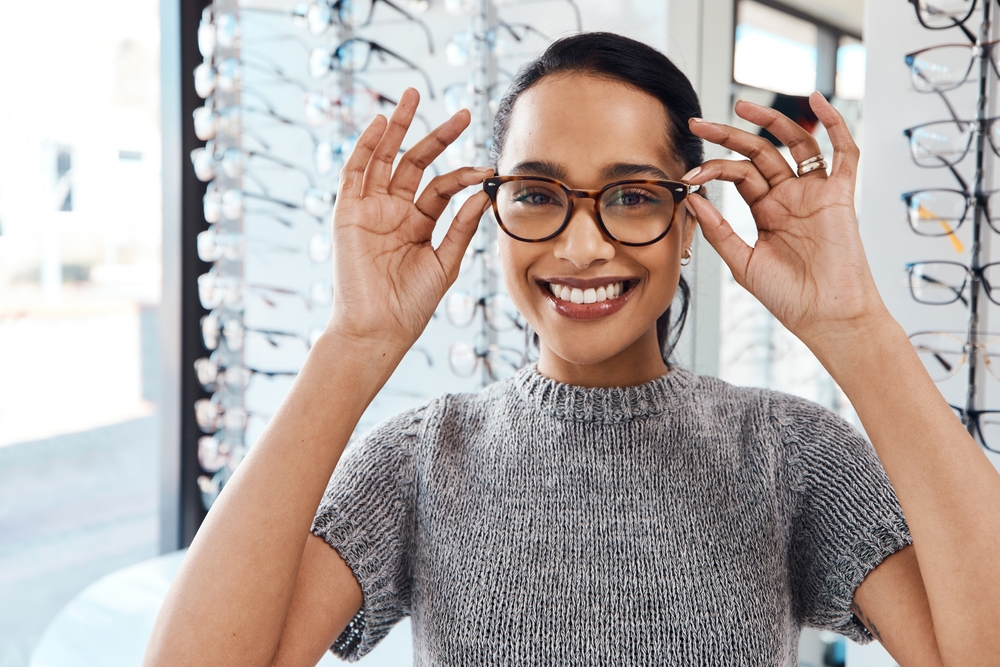
For many patients, the appeal of same day spectacles comes down to one simple question. Can you walk out of your eye exam wearing a finished pair of glasses? The honest answer is sometimes yes and sometimes no.
The difference depends on your prescription type and lens choice. A clinical detail your eye doctor may catch during the exam also matters. Most patients never think about this detail before their appointment.
Same-day service also depends on the specific lab equipment a practice uses. Knowing these factors ahead of time can save you a return trip. This guide breaks down each factor so you know what to expect. Here is what actually determines whether one visit is enough to walk out with new eyewear.
Key Takeaways
- Whether same-day glasses are possible depends on prescription type, lab setup, and health factors like blood sugar stability.
- Progressive lenses come with an adjustment window that patients need to plan for, no matter how fast the glasses are made.
- The coatings and materials on your lenses shape how well they protect your eyes and hold up over time.
- Speed and quality are not in conflict if you choose the right lens type and coatings from the start.
- Readers commonly ask about contact lenses, digital eye strain, and when to call their eye care provider after getting new glasses.
How Same Day Eyeglasses Actually Work: The Eye Exam and In-Store Lab Process
The optical lab is what separates a same-day eyeglasses visit from a standard one. Practices with an in-store lab let lab techs cut and mount lenses while you wait. Without that setup, even a basic prescription goes to an outside lab, which usually takes several days.
Same-day service works best for a single-vision prescription within a standard range. Single-vision lenses correct only one focal distance, so cutting them is direct. Patients who need lens modifications for a specific frame often wait longer.
Progressive, high-index, and specialty lenses take more time everywhere. Their multi-zone design needs precise work across different parts of the lens. Frame availability adds another variable to the timeline. A discontinued frame, or one only certain retailers stock, can delay the start.
Walk-in patients sometimes expect same-day results by default. Eye dilation during your exam adds time to the visit itself. That can shrink the lab’s processing window before closing time.
If same-day glasses matter to you, call ahead and confirm the practice runs an in-store lab. Ask whether your prescription type qualifies, since staff can often check lab workload and frame stock over the phone.
Does your blood sugar affect your eye exam results?
Blood sugar levels have a direct effect on refraction accuracy. This is one of the most overlooked reasons a new prescription can feel off right away. Fluctuating blood glucose temporarily distorts the eye’s natural lens.
That distortion produces a myopic shift or hyperopic shift, since increased blood sugar leads to a myopic shift according to research indexed on PubMed. Your prescription may read differently depending on when the exam happens.
Doctors often advise patients with diabetes or unstable blood sugar to wait for stable glycemic control before finalizing a refraction. HbA1c levels show clinicians how consistent blood sugar has been over time. If your levels have been shifting, your eye doctor may recommend rescheduling the refraction portion of your exam. Same-day glasses can still happen once your levels settle.
Why These Fluctuations Are Usually Temporary
These shifts are usually temporary and resolve once levels stabilize, often within a few weeks. That’s one more reason routine health screening matters before any eye exam, since a stable baseline keeps your prescription accurate.
Progressive Lenses and the Adaptation Period: What to Expect After Same Day Service
Getting progressive lenses made the same day does not skip the adjustment that follows. The lens design builds in this adaptation period. It has nothing to do with how quickly a lab made the glasses. In fact, a study in the journal Scientific Reports found that PAL wearers go through an adaptation process with a variable duration that typically spans one to three weeks. Your eyes and brain need that time to learn which zone to use for near, intermediate, and distance vision.
What the Adaptation Period Feels Like
The adaptation process can feel disorienting at first. Progressive multifocal plastic lenses shift in power from top to bottom. Your brain has to adjust to new visual input from an unfamiliar surface. Many patients notice a fishbowl effect in the first few days.
The curving edges of that fishbowl effect are normal. Most patients notice it fade within one to two weeks. Depth perception is another area that takes time to recalibrate. Looking through the lower lens changes how steps and uneven ground appear.
Head movements also work differently with progressive lenses than with single-vision designs. You learn to point your nose toward what you want to see clearly. Glancing sideways through the lens edge causes blur instead.
Blurred vision and eye strain are common during the first week. This does not mean the prescription is wrong. Eye discomfort typically improves as the visual experience becomes familiar.
Patients switching from bifocal lenses often find the adjustment more pronounced. Reading glasses users making the switch face a similar shift.
Keeping a backup pair of your old glasses is practical during this window, especially if you drive regularly.
Tips for a Faster Adjustment
Presbyopia, the age-related loss of close-up focus, is the main reason most people eventually need progressive lenses. They correct near, intermediate, and distance vision in a single lens, which is why they remain a popular multifocal option.
Consistent daily wear speeds up the adaptation process significantly. Wearing your progressive lenses from morning until night helps your brain map the zones faster. Switching back and forth to old glasses can confuse that process and slow it down.
Most patients report feeling fully adjusted within two to three weeks of steady wear.
High-Index Lenses, Anti-Reflective Coating, and UV Protection: Choosing the Right Prescription Glasses
Once you know your prescription qualifies for same-day service, the next decision is lens quality. A lab can make prescription glasses fast without sacrificing protection, or fast with options that wear out quickly. Lens choice is where that difference gets made.
High-Index Lenses for Stronger Prescriptions
High-index lenses are thinner and lighter than standard plastic lenses. They bend light more efficiently than older materials. The lens index measures how well the material refracts light. A higher index lets the inner curves of the lens sit flatter.
For patients with stronger prescriptions, this produces a noticeably slimmer lens. That slimmer lens also sits better in the frame.
Anti-Reflective Coating and Blue Light
Anti-reflective coating, also called anti-reflective treatment, reduces glare and reflections on both lens surfaces. This matters most at night and during screen use. Without it, more light scatters across the lens. That scattering builds visual fatigue over hours of wear.
Many patients also ask about blue light filter lenses and Blue Light Glasses. Anti-reflective treatment already reduces a large share of screen-related glare. Knowing this helps before adding a separate filter.
UV Protection and Sunglasses
UV protection is non-negotiable for long-term eye health. The National Eye Institute recommends providing 99 to 100 percent protection from UVA and UVB rays, so coverage should reach that range on both fronts.
Most quality prescription lenses include UV protection as a standard feature. Patients should still ask rather than assume.
Polarized sunglass lenses combine UV protection with glare reduction. They are a practical choice for anyone who spends time outdoors.
Scratch Resistance and Lens Care
Scratch-resistant lenses hold up better over time, especially in dusty or active environments. Wear and tear from improper cleaning speeds up coating breakdown. A microfiber cleaning cloth lifts oils and particles without scratching the surface. Using that cloth consistently keeps the lens performing the way it did on day one.
Lens material also affects impact resistance and overall durability. Polycarbonate and Trivex materials are lighter and more impact-resistant than standard plastic. Opticians often recommend these materials for children and for anyone with an active lifestyle. Impact resistance adds another layer of protection beyond basic vision correction.
Photochromic lenses that darken in sunlight offer another layer of convenience. They combine clear indoor vision with built-in UV protection outdoors. Many patients appreciate not needing a separate pair of prescription sunglasses. Talk with your optician about which lens features fit your daily routine best.
Ask your optician to explain every coating listed on your receipt. Understanding what you are paying for helps you make a confident choice. Ask about warranty coverage before you commit to a specific pair.
Here’s What Determines If You Get Same Day Spectacles
Same day spectacles are genuinely possible for many patients, though the right answer depends on your prescription and health history. A blood sugar swing or a specialty lens can shift the timeline, no matter how fast the lab works. Coatings, materials, and fit determine how well your glasses perform once you leave the office.
If you are unsure whether your situation fits same-day service, talk with a professional about your prescription and health history. That conversation gives you a clearer picture than any general guide. Schedule a comprehensive eye exam to find out what to expect at your own appointment today!
FAQs
Can I get contact lenses the same day as my eye exam?
Contact lenses require a separate fitting beyond a standard eye exam. That fitting includes measurements and a trial period to confirm proper fit. Some practices complete this at the same visit. Even so, same-day dispensing depends on whether trial lenses in your prescription are in stock.
How do I know if my eye health affects whether I can get same-day glasses?
Your eye doctor reviews your eye health during the exam. They flag anything that affects your prescription or lens options. Conditions like dry eyes or other eye problems can sometimes shift refraction results. Sharing your full eye health history beforehand helps your doctor give an accurate read.
What should I do if my new glasses cause eye strain or blurred vision?
Contact your eye care provider if eye strain or blurred vision continues past two weeks. Expect some discomfort during adjustment, especially with progressive lenses. If symptoms worsen, tell your provider right away so they can check the prescription, lens placement, and frame fit.
Can digital eye strain make it harder to adjust to a new prescription?
Digital eye strain produces symptoms that overlap with a poor prescription fit, including blurred vision and eye discomfort, since a peer-reviewed review describes dry eyes, itching, foreign body sensation, and watering as common markers. Cutting screen time during the first week helps you tell whether the issue is screen fatigue or your glasses.
When should I follow up with my eye care provider after getting new glasses?
Follow up if your vision does not improve within two weeks. Also reach out if eye discomfort feels significant or the frame feels wrong. A frame adjustment or prescription recheck is a normal part of aftercare. Do not wait longer than a month if something feels consistently off.
Sources
- National Eye Institute, providing 99 to 100 percent protection from UVA
- PubMed (NIH/NLM), increased blood sugar leads to a myopic shift
- Scientific Reports, via PubMed Central (NIH/NLM), adaptation process with a variable duration
- PubMed Central (NIH/NLM), dry eyes, itching, foreign body sensation, watering